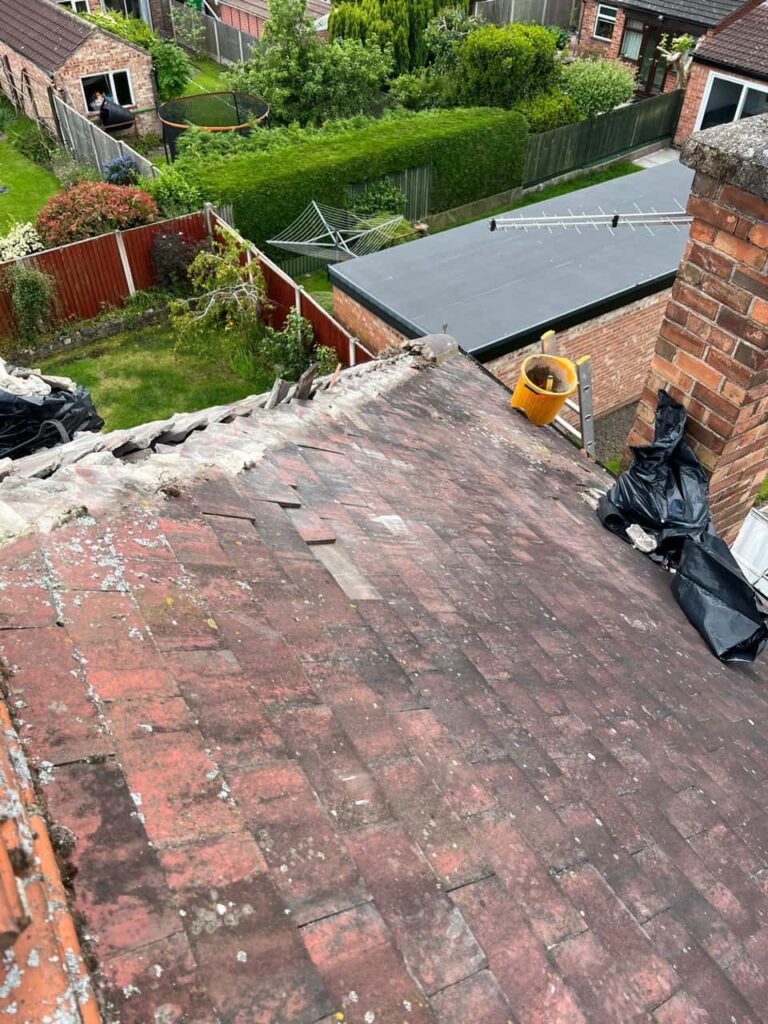
A single damaged roof tile can be enough to allow water into a property, particularly during prolonged or wind-driven rain. Tiles form the roof’s primary weather-resistant covering, and even a small crack, gap or displacement can interrupt the way water is directed down the roof.
However, the visible tile is not always the only problem. The condition of the underlay, battens, fixings and surrounding tiles will influence whether moisture reaches the roof space. A professional inspection is therefore important before assuming that replacing one tile will resolve the leak completely.
How One Damaged Tile Can Allow Water Inside
Roof tiles are installed in overlapping rows so that rainfall flows towards the eaves. When one tile becomes cracked, broken or displaced, water may reach the materials below instead of remaining on the outer surface.
An internal leak is more likely when:
- A substantial section of the tile is missing
- A crack extends through the tile
- The tile has slipped and exposed the underlay
- Strong wind drives rain beneath the surrounding overlaps
- The underlay is torn, brittle or sagging
- Water repeatedly reaches the same vulnerable area
- Nearby battens or fixings have deteriorated
The amount of visible damage does not always reflect the amount of moisture entering beneath the roof.
Why a Small Crack Can Still Matter
A hairline crack may appear insignificant from ground level, but it can widen through repeated temperature changes and movement. Water may also be drawn through the crack during sustained rainfall.
The affected tile might remain in position while moisture gradually reaches its underside. If the underlay below is already damaged, even a narrow opening can contribute to internal dampness.
Slipped Tiles Create Exposed Gaps
A tile does not need to be broken to cause a problem. Failed fixings, weakened battens or movement within the roof can allow it to slide out of position.
This exposes part of the underlay and disrupts the intended overlap with neighbouring tiles. Rain can then enter the gap, particularly when accompanied by strong wind.
Repositioning the tile may not be enough if the reason it slipped is left untreated. The supporting batten and fixing method should also be checked.
The Underlay Provides Secondary Protection
Underlay sits beneath the tiles and should direct incidental moisture towards the eaves. If it remains intact, it may prevent water passing into the roof space when one tile is damaged.
Older underlay can become brittle, torn or unsupported. Where it has deteriorated, water entering through the damaged tile may pass directly towards insulation, timbers or ceilings.
This concealed layer often determines whether one faulty tile causes an immediate internal leak or remains unnoticed for some time.
Water May Appear Away from the Damaged Tile
The location of an internal stain does not always identify the position of the external defect. Water can travel down underlay, along rafters or across other surfaces before dripping into the room below.
A damp patch may therefore appear several feet from the damaged tile. Inspecting only the roof directly above the stain can result in the actual entry point being missed.
Professional diagnosis involves considering the roof slope, nearby junctions and the likely route taken by the water.
Weather Conditions Can Affect the Leak
A damaged tile may not leak during every shower. Light rain falling directly down the roof might be carried away without reaching the opening.
The problem may only become visible during:
- Heavy or prolonged rainfall
- Wind-driven rain from a particular direction
- Rapid snow or frost melt
- Rainfall combined with blocked drainage
- Repeated wet weather before materials have dried
Noting when the leak occurs can help identify whether a damaged tile, roof junction or drainage feature is responsible.
Nearby Tiles May Also Be Vulnerable
One damaged tile can sometimes indicate a wider local problem. Adjoining tiles may have been disturbed by the same movement or weather event, while nearby fixings could also be deteriorating.
A roofer should inspect the surrounding area for:
- Further cracks or chips
- Loose or corroded fixings
- Weak battens
- Damaged underlay
- Open tile overlaps
- Debris restricting water flow
- Signs of earlier patching
This helps ensure that the repair restores the complete affected section rather than only its most visible defect.
What Damage Can Water Cause Beneath the Tile?
Even a modest amount of repeated water ingress can affect hidden materials. Potential consequences include:
- Damp or weakened battens
- Staining on roof timbers
- Wet insulation
- Ceiling discolouration
- Peeling paint or softened plaster
- Corrosion of nearby fixings
- Organic growth in persistently damp areas
The sooner the entry point is repaired, the lower the likelihood of moisture spreading into surrounding components.
Will Replacing the Tile Stop the Leak?
Replacing the damaged tile may solve the problem when:
- The defect is isolated
- Surrounding tiles remain secure
- The supporting batten is sound
- The underlay remains functional
- There are no nearby flashing or drainage defects
- Moisture has not caused extensive secondary damage
If any of these components are compromised, additional localised work may be needed. The objective is to address both the visible damage and the reason water was able to enter.
Why Professional Inspection Is Important
Roof leaks can have several possible causes, including failed flashing, damaged valleys, defective mortar and blocked gutters. A broken tile near the damp area may be coincidental rather than the true source.
An inspection allows the roofer to trace the likely moisture path and check the condition of concealed supporting materials. This avoids relying on assumptions or repeatedly treating the wrong area.
Conclusion
One damaged roof tile can be responsible for an internal leak, especially when the underlay below is deteriorated or rain is driven through the opening by strong wind. Water may travel before becoming visible, so the internal damp patch may not sit directly beneath the faulty tile.
Portsmouth Roofing Repairs can inspect leaking roofs in Portsmouth, Hampshire, identify whether a damaged tile is the source and assess the surrounding materials. If you have noticed a broken tile or signs of water ingress, contact the team to arrange a professional assessment.
Call us on: 023 8235 2090
Click here to find out more about Portsmouth Roofing Repairs
Click here to complete our contact form and see how we can help with your roofing needs.